

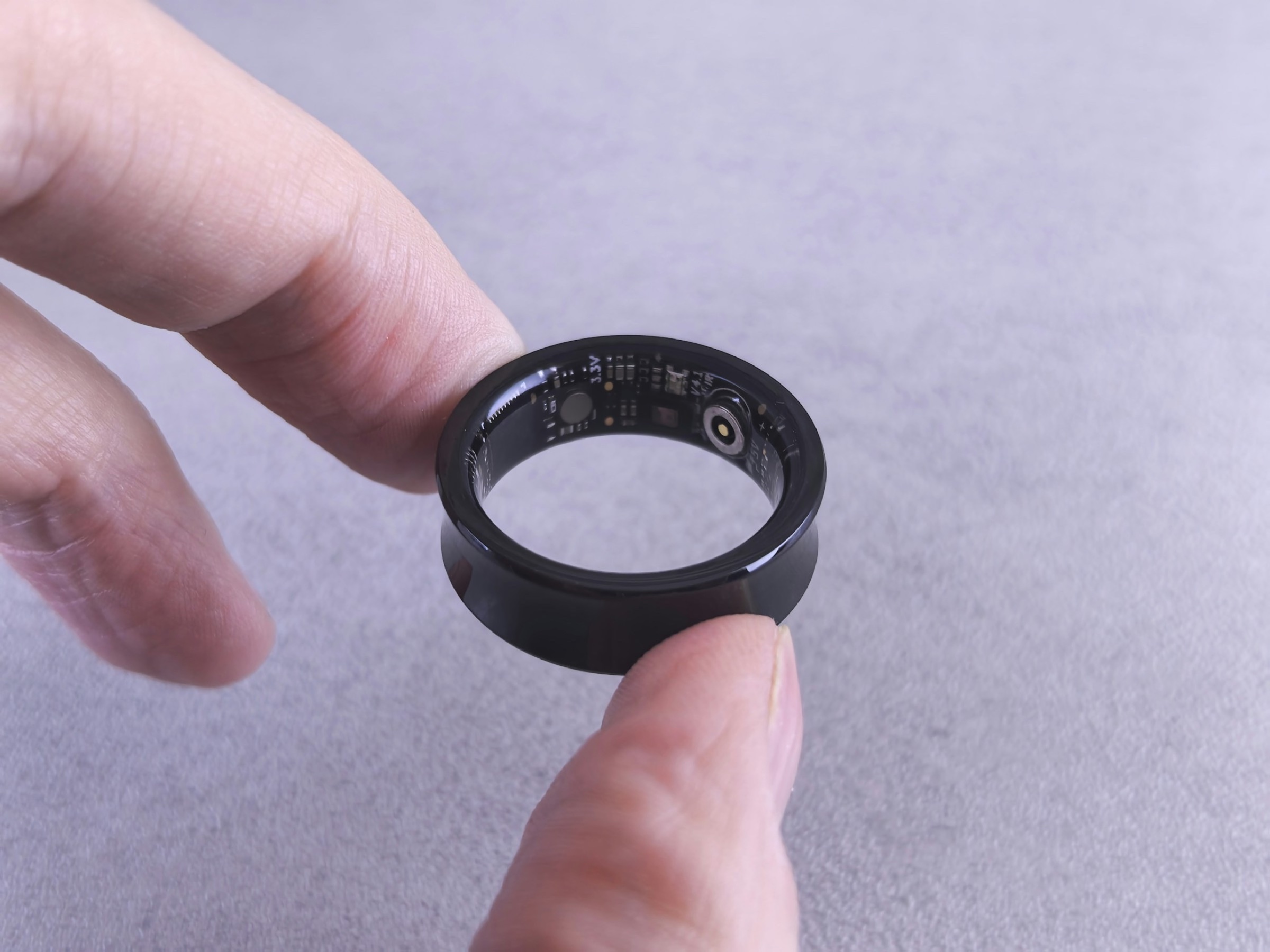
You wake up feeling solid, then a ring assigns the night a score of 58. The number can change how the morning feels before your feet reach the floor.
Smart rings are good at collecting certain signals from the finger. They are less certain when software turns those signals into sleep stages, stress labels, readiness scores, and health advice. Accuracy depends on the metric, the device, the fit, the activity, and the person wearing it.
The useful approach is simple: know what the ring measured, separate trends from single readings, and keep consumer data in its proper lane.
What a Smart Ring Actually Measures
Most rings use optical sensors to detect changes in blood flow with each heartbeat. Temperature sensors track changes at the skin. Motion sensors record acceleration and movement. The device may also estimate breathing rate from patterns in those signals.
Sleep stages, recovery, stress, and readiness are calculated outputs. An algorithm combines direct sensor readings with age, recent activity, and a personal baseline. Two brands can receive similar raw signals and produce different scores because their formulas differ.
Heart Rate and Heart Rate Variability
Resting overnight conditions give an optical sensor a clean job. The hand moves less, contact stays steady, and the pulse signal usually has less interference. A 2025 validation study of nocturnal resting heart rate and heart rate variability found high agreement for Oura Gen 3 and Gen 4 compared with electrocardiogram measurements. Accuracy differed across the other wearables tested.
Motion, cold hands, loose fit, skin contact, tattoos, and changes in circulation can make optical readings harder. Fast intervals and strength work add another source of error because the hand and forearm move while grip pressure changes.
Sleep Time and Sleep Stages
Rings can often estimate when a person fell asleep and how long the sleep period lasted. Stage estimates are more demanding. A device has no direct view of brain waves, eye movements, or muscle activity, which are part of clinical polysomnography.
In a 2024 study comparing Oura Gen 3 with multi-night home polysomnography, the ring showed good agreement for total sleep time and several broad sleep measures in 96 participants. It was better at identifying sleep than wakefulness. Stage accuracy varied, so a precise-looking deep-sleep number still carries uncertainty.
A 2025 university sleep-lab study of three commercial rings tested performance in people with a range of sleep and medical conditions. Its premise matters: results from healthy volunteers may not transfer cleanly to people who already have disrupted sleep.
Accuracy Depends on the Question
“Is this accurate?” needs a metric attached to it.
- Overnight resting pulse: often one of the stronger measurements when fit and signal quality are good.
- Nightly heart rate variability: useful as a personal trend under consistent conditions. Comparisons between people are much harder to interpret.
- Total sleep time: helpful for spotting a repeated pattern, with room for error around quiet wakefulness.
- Sleep stages: estimates that should be read as approximate proportions rather than a clinical sleep study.
- Readiness or stress: brand-specific interpretations, not standardized medical measurements.
A ring that performs well during sleep may still struggle during exercise. A device that tracks one person’s resting pulse closely may fit another person’s finger poorly. Validation for one model and software version does not automatically apply to the next update.
Use Trends Before Scores
A single low score can follow a loose ring, a late meal, alcohol, illness, travel, a warm room, or a night spent reading quietly in bed. Start with the pattern across two to four weeks.
Look for repeatable connections. Does resting heart rate stay higher for several nights after unusually hard training? Does sleep timing drift later during a demanding work stretch? Does a regular bedtime line up with more consistent total sleep?
Then test one routine at a time. Keep the experiment boring enough to interpret. Change bedtime consistency for a week instead of changing caffeine, training volume, dinner time, and screen use together.
IHJ’s earlier guide to wearables and heart rate variability explains why more data can create noise. The article on sleep trackers and anxiety also covers the point where measurement starts interfering with rest.
Keep Consumer Data Out of the Diagnostic Lane
The U.S. Food and Drug Administration separates low-risk general wellness products from devices intended to diagnose, monitor, or guide treatment for disease. Its current device-classification guidance emphasizes intended use. A wellness feature and an FDA-authorized medical function can exist on similar-looking hardware, but the claims and evidence behind them differ.
Do not use a readiness score to change medication, dismiss symptoms, or overrule a treatment plan. A normal-looking ring trace cannot rule out a rhythm problem or sleep disorder. An unusual reading also does not establish one.
Bring a clear trend to a clinician when it matches symptoms or remains far outside your baseline. Include dates, the device and model, what you were doing, and any symptoms. Seek urgent care for chest pain, fainting, severe shortness of breath, signs of stroke, or another emergency regardless of what the ring displays.
Decide Whether the Ring Earns Its Place
A smart ring earns space on your hand when it supports a useful routine. It might expose irregular sleep timing, show the recovery cost of alcohol, or provide a quiet activity reminder. The best signal is one that leads to a sustainable choice you can evaluate.
It loses value when the daily score controls the workout, creates anxiety, or sends you chasing tiny changes that have no visible effect on performance or well-being. Take the ring off for several days if the feedback starts running the routine.
Smart rings can measure overnight pulse and broad sleep patterns with useful accuracy under favorable conditions. Their derived scores remain estimates. Treat the device as a trend finder, verify important questions with the right medical tool, and let how you feel and function remain part of the record.