

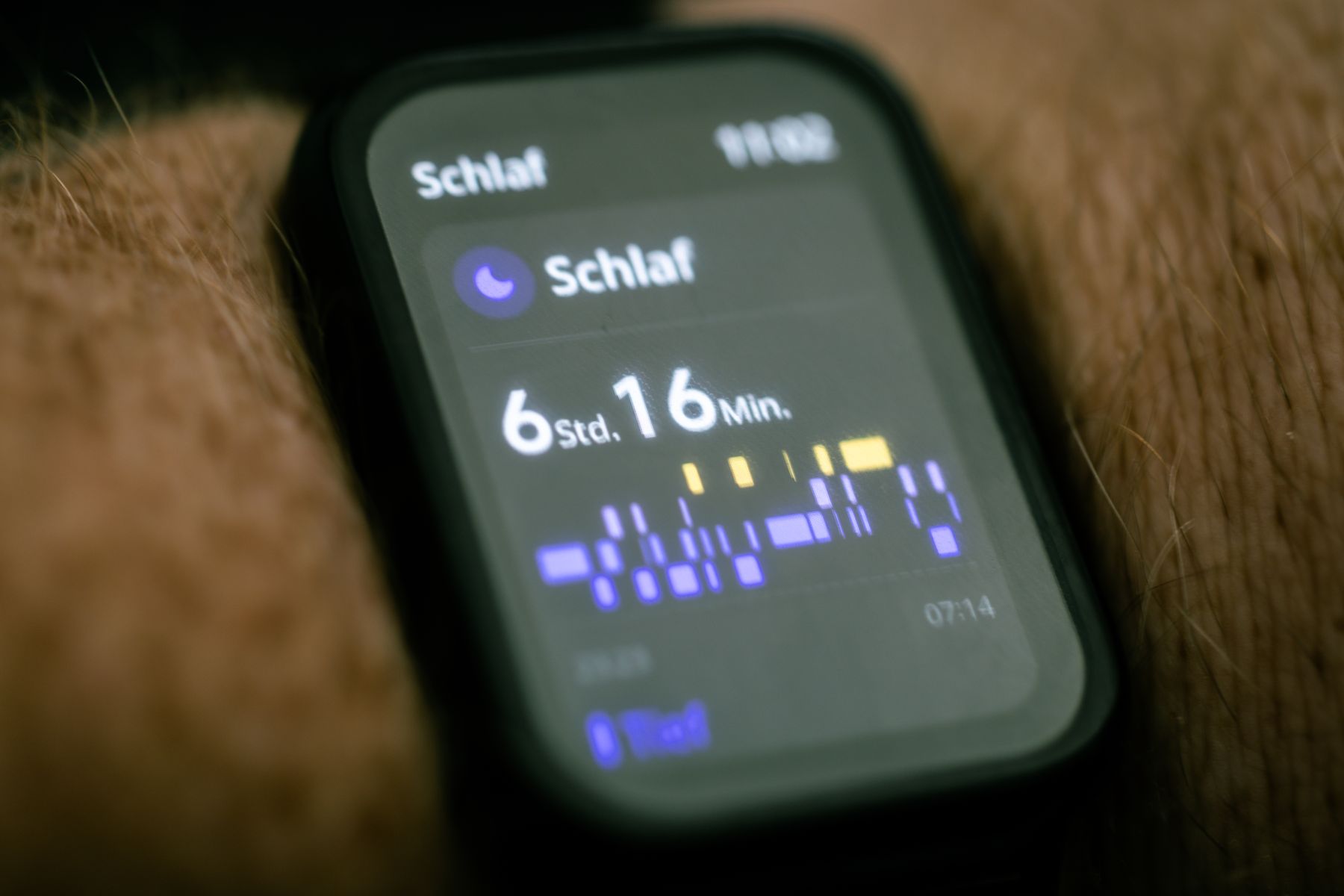
A sleep tracker can turn an ordinary morning into a performance review. The app assigns a score, divides the night into stages, and announces whether the body recovered. Some users find patterns that improve their routines. Others begin distrusting how they feel whenever the number says they slept badly.
A sleep tracker estimates a complex biological state from limited signals. Its readings can be useful, but trouble begins when an estimate becomes more authoritative than symptoms, function, or clinical evaluation.
What the Device Can See
Most watches and rings combine movement with heart-rate signals. Some add skin temperature, oxygen estimates, breathing rate, or sound. An algorithm infers when sleep began, when it ended, and how much time belonged to different stages.
A clinical sleep study measures more. Polysomnography records brain waves, eye movements, muscle activity, breathing, oxygen, heart rhythm, and body movements under controlled conditions. Consumer devices do not reproduce that setup, and brands use different formulas that may change with software updates.
Total Sleep Time Is Usually More Useful Than Stage Minutes
Wearables tend to be better at detecting broad sleep and wake patterns than identifying exact stages. Quiet wakefulness can look like sleep. Restless sleep can look like wakefulness. A device may report unusually little deep sleep even when the person feels restored.
For most users, bedtime consistency, estimated total sleep, and weekly trends offer more practical information than whether a particular night contained 54 or 72 minutes of deep sleep. The precision displayed on the screen exceeds the precision of the underlying measurement.
A Score Can Change the Day Before Anything Else Does
Imagine waking up feeling reasonably well, then seeing a score of 49. The number can prompt a search for fatigue, poor focus, or irritability. Normal afternoon tiredness becomes proof that the tracker was right. That expectation can affect behavior even if the original estimate was poor.
The reverse also happens. A high score may reassure someone who is sleepy enough to make driving unsafe. Function and symptoms should lead. A device cannot grant permission to ignore them.
When Tracking Becomes Orthosomnia
Sleep clinicians use the term orthosomnia to describe an unhealthy preoccupation with achieving ideal sleep data. A person may extend time in bed, cancel activities, repeatedly adjust routines, and worry about small changes in a score. Those efforts can make sleep less predictable.
Sleep is partly automatic. Trying harder to force it often increases alertness. Checking a clock or app during the night adds another task to a period that should contain fewer decisions.
The Medical Limits Are Clear
The American Academy of Sleep Medicine states that consumer sleep technology should not be used to diagnose or treat sleep disorders when it has not been validated and cleared for that purpose. The data can still support a patient-clinician conversation when considered within a proper evaluation.
A normal score does not rule out sleep apnea, restless legs syndrome, narcolepsy, circadian rhythm disorders, or chronic insomnia. A low score does not establish any of them.
Useful Patterns a Tracker Can Reveal
Trackers can show that bedtime shifts later during the workweek, sleep duration drops after late alcohol, or wake time varies by several hours on weekends. They can make the effect of travel, illness, a newborn, or night work easier to see.
A simple two-week record can be valuable. Pair device estimates with bedtime, wake time, caffeine and alcohol timing, exercise, major stress, and a morning rating of how rested you feel. The relationship between behavior and function matters more than a single proprietary score.
Warning Signs That Deserve Evaluation
Seek medical advice for loud habitual snoring with pauses or gasping, excessive daytime sleepiness, drowsy driving, persistent insomnia, unusual movements, morning headaches, or a strong urge to move the legs at night. The National Heart, Lung, and Blood Institute explains that sleep studies may be used to evaluate breathing disorders, movement disorders, narcolepsy, and other conditions using multiple physiological measurements.
Bring a short summary rather than months of screenshots. Note when symptoms began, how often they occur, medicines and substances used, work schedule, and what the bed partner observes.
Try a Two-Week Reset
If the tracker is increasing anxiety, stop wearing it for two weeks. Keep a paper note of bedtime, wake time, and morning function if you still want a record. Do not check the clock during awakenings.
Maintain a consistent wake time, make enough room for sleep, keep caffeine earlier in the day, and dim the last part of the evening. If sleep improves without the device, the removal itself was a useful intervention.
Set Rules for Keeping It
Review data weekly rather than immediately upon waking. Hide stage breakdowns if they do not change a decision. Turn off alerts that create worry without a response plan. Decide in advance which trend would prompt a routine visit.
Use the same device long enough to establish a personal baseline instead of comparing scores across brands. A change in hardware or software may shift the numbers even when sleep has not changed. If an app updates its algorithm, treat the new score as a new measurement series rather than proof that the body improved or deteriorated overnight.
Couples should also avoid turning tracker results into an argument about who slept worse. One partner may move more, remember awakenings differently, or wear a device with a different algorithm. The useful question is whether either person has symptoms or a pattern that needs attention.
A sleep tracker earns its place when it supports a behavior and then recedes. It should help you notice that bedtime has drifted or that sleep is consistently short. It should not make every morning begin with a verdict.