

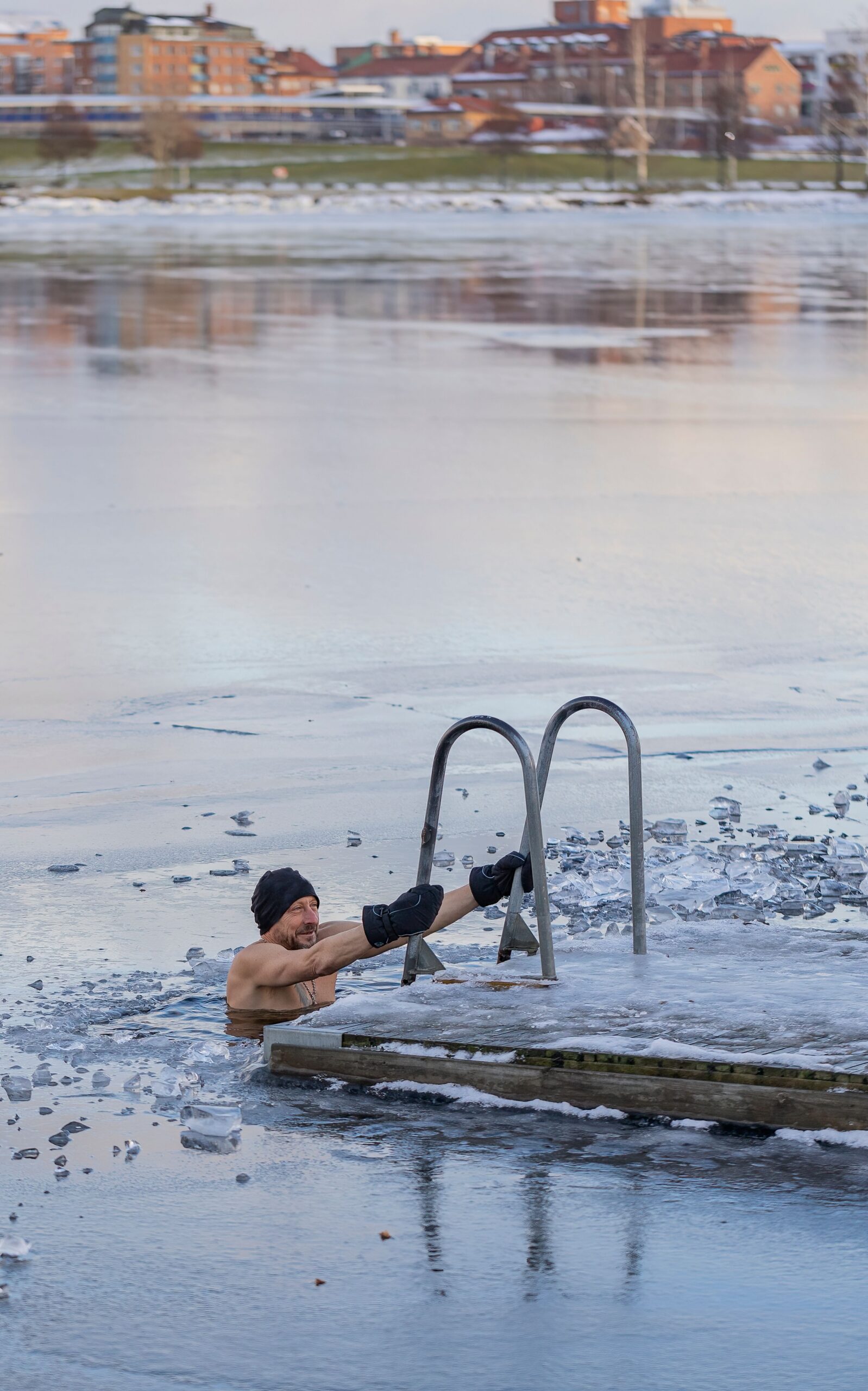
Cold water announces itself fast. Breathing jumps, the chest tightens, and the skin burns before numbness arrives. That immediate jolt helps explain the appeal of a cold plunge: the experience feels powerful enough to promise a powerful result.
The research tells a narrower story. Cold-water immersion can help with selected recovery outcomes after hard exercise, and emerging studies suggest possible changes in stress, sleep, and well-being. Broad claims about immunity, fat loss, depression, testosterone, or longevity remain ahead of the evidence.
What Counts as a Cold Plunge?
Studies use several forms of cold-water exposure. A participant might sit in a tub after exercise, take a cold shower, swim outdoors, or alternate hot and cold water. Temperatures, immersion depth, session length, and training status vary. Those differences make a single claim about “cold plunges” hard to test.
A 2025 systematic review in PLOS One examined cold-water immersion and cold showers in healthy adults. The studies were small and highly varied. The review found time-dependent effects in some outcomes, including lower stress several hours after exposure, while immediate and one-hour immune measurements showed no significant change. Evidence for sleep and quality of life was limited, and the authors called for larger, more diverse trials.
That is the central constraint: a striking biological response can be measured without establishing a durable health benefit.
Recovery Benefits Depend on the Workout
After a Race or Tournament
Cold-water immersion can reduce perceived muscle soreness after demanding exercise. For an athlete facing another event soon, feeling less sore may help restore comfort and readiness. The effect tends to matter most when recovery time is short.
Perceived recovery and tissue adaptation are different outcomes. A plunge may make the next day feel easier without improving every marker of repair or performance. Sleep, food, fluid, and an appropriate training load still carry most of the recovery work.
After Strength Training
Habitual immersion immediately after resistance training may blunt some strength and muscle adaptations. A 2021 systematic review and meta-analysis found that regular post-exercise cold-water immersion reduced adaptations to resistance exercise, while endurance adaptations appeared unchanged. The exact effect depends on protocol and study population, yet the practical signal is worth respecting.
Someone training primarily for muscle or strength may reserve cold exposure for competition periods, unusually demanding sessions, or days when rapid recovery outranks long-term adaptation. The IHJ guide to how much exercise is enough offers a broader way to place recovery tools inside a sustainable program.
The Mood and Immunity Claims Are Still Early
Cold exposure activates the sympathetic nervous system and changes breathing, heart rate, and stress hormones. People often describe alertness or improved mood afterward. Small studies can capture those short-term shifts, while evidence for treating depression or anxiety remains insufficient. A plunge should never substitute for mental health care.
The immune story is similarly incomplete. The 2025 review found no significant immediate or one-hour immune effect. One included cold-shower trial reported fewer sickness-absence days, but participants did not report fewer days of illness. That difference raises questions about behavior, perceived vigor, and workplace attendance rather than proving infection prevention.
Claims about major fat loss also stretch beyond the available data. Cold activates heat-producing processes, but a brief exposure does not create a clinically meaningful weight-loss strategy. Regular movement, adequate sleep, dietary quality, and long-term energy balance remain the stronger levers.
Cold Shock Is a Real Physiologic Load
The first moments in very cold water can trigger an involuntary gasp, rapid breathing, a sudden rise in heart rate, and a spike in blood pressure. The American Heart Association warns that this cold-shock response can stress the heart and create a drowning hazard. Open water adds current, waves, unstable footing, and delayed rescue.
Cold can also impair dexterity and judgment before a person recognizes the danger. Longer exposure raises the risk of hypothermia. Shivering, clumsiness, confusion, slurred speech, unusual drowsiness, or loss of coordination signals an emergency. The person should leave the water, receive safe rewarming, and get medical help.
Chest pain, fainting, severe shortness of breath, a racing or irregular heartbeat, weakness on one side, or difficulty speaking also requires emergency care.
Who Should Get Medical Guidance First?
People with coronary disease, heart-rhythm disorders, poorly controlled blood pressure, prior stroke, seizure disorders, Raynaud phenomenon, impaired sensation, or a history of fainting should discuss cold immersion with a clinician. Pregnancy, recent illness, and medicines that affect heart rate, blood pressure, alertness, or temperature regulation can also change risk.
Alcohol and recreational drugs increase danger by altering judgment, balance, blood vessels, and temperature awareness. Breath-holding contests and hyperventilation near water carry a risk of loss of consciousness. Combining them with a plunge creates a preventable emergency.
A Safer Trial Uses Boring Guardrails
- Start with cool water and a brief exposure instead of chasing extreme temperature or duration.
- Keep the head above water, breathe normally, and avoid deliberate hyperventilation.
- Use a stable tub or a supervised setting with an easy exit.
- Have another adult present, especially outdoors.
- Enter only when sober, well, rested, and able to warm up afterward.
- Leave immediately for chest discomfort, dizziness, panic, confusion, weakness, or uncontrolled breathing.
Outdoor cold-water swimming belongs in a separate risk category. Water temperature, current, distance from shore, weather, and rescue access all matter. A photograph of an ice swimmer can make the practice look calm; the physiology remains demanding.
Decide What Job the Plunge Is Supposed to Do
A cold plunge is easier to judge when it has a specific job. For short-turnaround soreness after an event, the evidence is plausible. For a morning ritual that creates alertness, personal experience may be enough if the practice is safe. For treating disease, changing hormones, preventing infection, or extending life, the current evidence cannot carry the claim.
Recovery tools should support training rather than crowd it out. Consistent movement, appropriate progressive overload, sleep, and nutrition have deeper evidence and larger effects. Readers building a strength routine can compare those fundamentals with the evidence on creatine, strength, and healthy aging.
Cold water can be invigorating, uncomfortable, useful in a narrow setting, and risky in the wrong one. Choose a clear purpose, keep the dose conservative, and let safety carry more weight than the intensity of the experience.
Sources
- PLOS One Systematic Review: Effects of Cold-Water Immersion on Health and Well-Being
- Sports Medicine Systematic Review: Post-Exercise Cold-Water Immersion and Training Adaptation
- American Heart Association: Cold-Water Plunges Come With Risks