

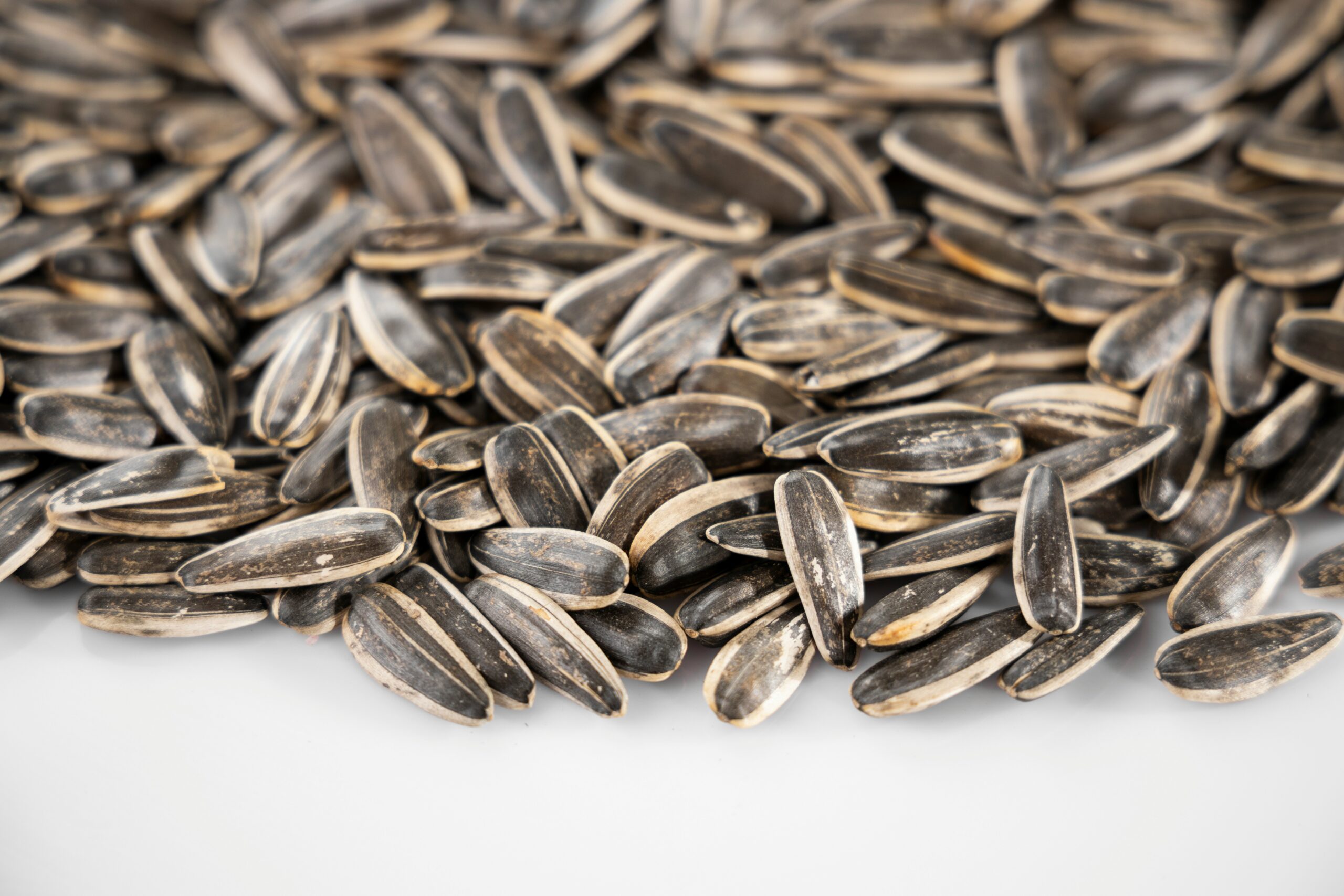
Walk through any grocery store and you’ll see them everywhere, though you may not notice: soybean oil in salad dressings, canola oil in packaged snacks, sunflower oil in “heart-healthy” spreads. Over the past decade, these so-called seed oils have gone from invisible ingredient to public enemy in certain corners of the internet. The claim is stark and memorable: seed oils are toxic, inflammatory, even a driver of chronic disease.
It’s a compelling story. It is also, like many compelling stories in medicine, incomplete.
The Rise of a Dietary Villain
Seed oils are not new. Cottonseed oil was widely used in the early 20th century; soybean oil became dominant after World War II as agriculture scaled and food manufacturing industrialized. Today, they are among the most commonly consumed fats in the American diet.
The concern about seed oils centers on two ideas. First, that they are highly processed, extracted using heat and chemical solvents. Second, that they are rich in omega-6 fatty acids, which some argue promote inflammation when consumed in excess.
From these premises, a conclusion has taken hold: seed oils are harmful and should be avoided entirely.
Medicine has seen this pattern before. A plausible mechanism becomes a sweeping recommendation. The difficulty is that human biology rarely follows a single narrative thread.
What the Science Actually Shows
If seed oils were as harmful as claimed, we would expect to see consistent evidence of worse health outcomes among people who consume them. Instead, much of the research points in the opposite direction.
Large observational studies and randomized trials have repeatedly found that replacing saturated fats (like butter) with polyunsaturated fats (like those found in many seed oils) is associated with lower risk of cardiovascular disease. Cholesterol levels improve. Rates of heart attack decline.
This does not mean seed oils are perfect. It does mean they are not behaving like a dietary toxin.
The omega-6 argument is similarly more nuanced than it appears. Omega-6 fatty acids can be involved in inflammatory pathways, but they also play essential roles in normal physiology. In real-world diets, higher omega-6 intake does not consistently correlate with increased inflammation. In fact, some studies suggest the opposite.
The human body is not a simple chemical equation. It is a system of feedback loops and compensations, where nutrients interact in ways that resist easy categorization as “good” or “bad.”
Processing, Context, and the Real Problem
Where the criticism of seed oils lands closer to the mark is not in the oils themselves, but in the foods that contain them.
Seed oils are a staple of ultra-processed foods—chips, packaged desserts, fast food. These foods are engineered for shelf life and palatability. They are also, almost without exception, associated with worse health outcomes.
It is easy, then, to mistake the vehicle for the driver.
Blaming seed oils for the harms of ultra-processed diets is a bit like blaming IV tubing for hospital infections. The tubing is present. It is not the root cause.
There are legitimate concerns about how oils are used at high temperatures, particularly in repeated frying, where oxidation can occur. But this is a matter of handling and context, not an inherent property that renders all seed oils dangerous.
The All-or-Nothing Trap
Nutrition discourse has a tendency toward extremes. Carbohydrates are evil. Fat is evil. Now, perhaps, seed oils are evil.
These frameworks are appealing because they simplify decision-making. They also tend to collapse under scrutiny.
In clinical practice, the patients who do best are not those who eliminate a single ingredient with zeal. They are those who adopt patterns that are, in the aggregate, sustainable and balanced: diets rich in whole foods, vegetables, lean proteins, and minimally processed ingredients.
Within such a pattern, the occasional use of seed oils—whether in cooking or as part of a broader diet—is unlikely to be the deciding factor in one’s health trajectory.
So, Are Seed Oils Bad for You?
The most honest answer is also the least satisfying: it depends on how they are used.
- In the context of ultra-processed foods, they are part of a larger dietary pattern that is associated with harm.
- In moderate amounts, used in home cooking as a replacement for saturated fats, they are generally considered safe—and in some cases beneficial.
- In high-heat, repeated industrial use, they can degrade in ways that are less desirable.
The evidence does not support the idea that seed oils are uniquely toxic or that eliminating them will, on its own, transform one’s health.
The More Useful Question
Perhaps the better question is not whether seed oils are bad, but what role they play in the diet as a whole.
If removing seed oils leads someone to cook more at home, eat fewer processed foods, and pay closer attention to ingredients, then the change may indeed be beneficial. But the benefit does not come from the absence of seed oils alone. It comes from the shift in behavior.
Medicine often advances not by identifying a single culprit, but by understanding systems—how small factors accumulate, how context shapes outcomes, how interventions work in the real world rather than in isolation.
Seed oils, it turns out, are less a villain than a variable.
And like many variables in health, they matter—but not in the way we are often told.