

Two people can share the same body mass index and carry fat in very different places. One may store more under the skin around the hips and thighs. The other may hold more deep in the abdomen around the organs. Those patterns help explain why weight alone gives an incomplete view of metabolic health.
Subcutaneous fat and visceral fat are both forms of adipose tissue, the body’s energy-storing tissue. Their location changes how they behave and how strongly they are associated with insulin resistance, heart disease, fatty liver disease, and other health outcomes.
The difference should guide better questions rather than a search for a perfect body shape. A waist measurement can add context to weight and lab results. It cannot show exactly how much visceral fat someone has.
Subcutaneous Fat Sits Under the Skin
Subcutaneous fat is the tissue you can pinch. It cushions the body, stores energy, helps regulate temperature, and produces signaling molecules. It is found throughout the body, including the abdomen, hips, thighs, and upper arms.
Having more subcutaneous fat can still accompany higher overall weight and metabolic risk. Its effects also depend on the area where it accumulates, the amount of muscle and liver fat present, genetics, hormones, activity, and other health factors. The tissue serves normal biological functions, so describing all body fat as inert or harmful misses its role.
Some subcutaneous storage may act as a relatively safer place for excess energy than the liver, muscle, or spaces around abdominal organs. That does not make it protective in every amount or every person. It helps explain why distribution adds information that a scale cannot provide.
Visceral Fat Occupies the Abdominal Cavity
Visceral fat sits deeper, packed between and around internal organs. It is more metabolically active than much of the fat under the skin. Molecules released from visceral tissue can enter circulation near the liver and are associated with inflammation, insulin resistance, higher triglycerides, and other cardiometabolic changes.
A 2024 UK Biobank analysis followed 24,265 adults who had abdominal magnetic resonance imaging. Each standard-deviation increase in visceral adipose tissue was associated with a 15 percent higher hazard of coronary heart disease. The association remained after adjustment for waist circumference. The link between abdominal subcutaneous fat and coronary risk weakened after the same adjustment.
That result describes association within a population. It cannot predict one person’s future or prove that a particular fat depot caused an event. It does reinforce a practical point: location carries information beyond total size.
Older research from the Framingham Heart Study also found that visceral fat was associated with incident cardiovascular disease after accounting for standard risk factors and overall adiposity. Evidence has continued to place visceral and ectopic fat, meaning fat stored in organs such as the liver, near the center of cardiometabolic risk.
Body Shape Gives a Clue, Not a Scan
Computed tomography and MRI can separate visceral from subcutaneous tissue. Those scans are expensive, and CT involves radiation. They are generally used when imaging is already medically indicated or in research, rather than as routine tools for someone curious about fat distribution.
Waist circumference is the practical proxy. The National Heart, Lung, and Blood Institute explains that a larger waist may signal more abdominal fat even when body mass index falls in a range that looks reassuring. It lists more than 35 inches for women and more than 40 inches for men as markers of increased risk in its general guidance.
Those cutoffs have limits. Risk can rise below them in some ethnic groups, and a tape cannot distinguish the tissue under the skin from the tissue around organs. Age, sex, menopause, pregnancy history, muscle mass, and ancestry can all affect interpretation.
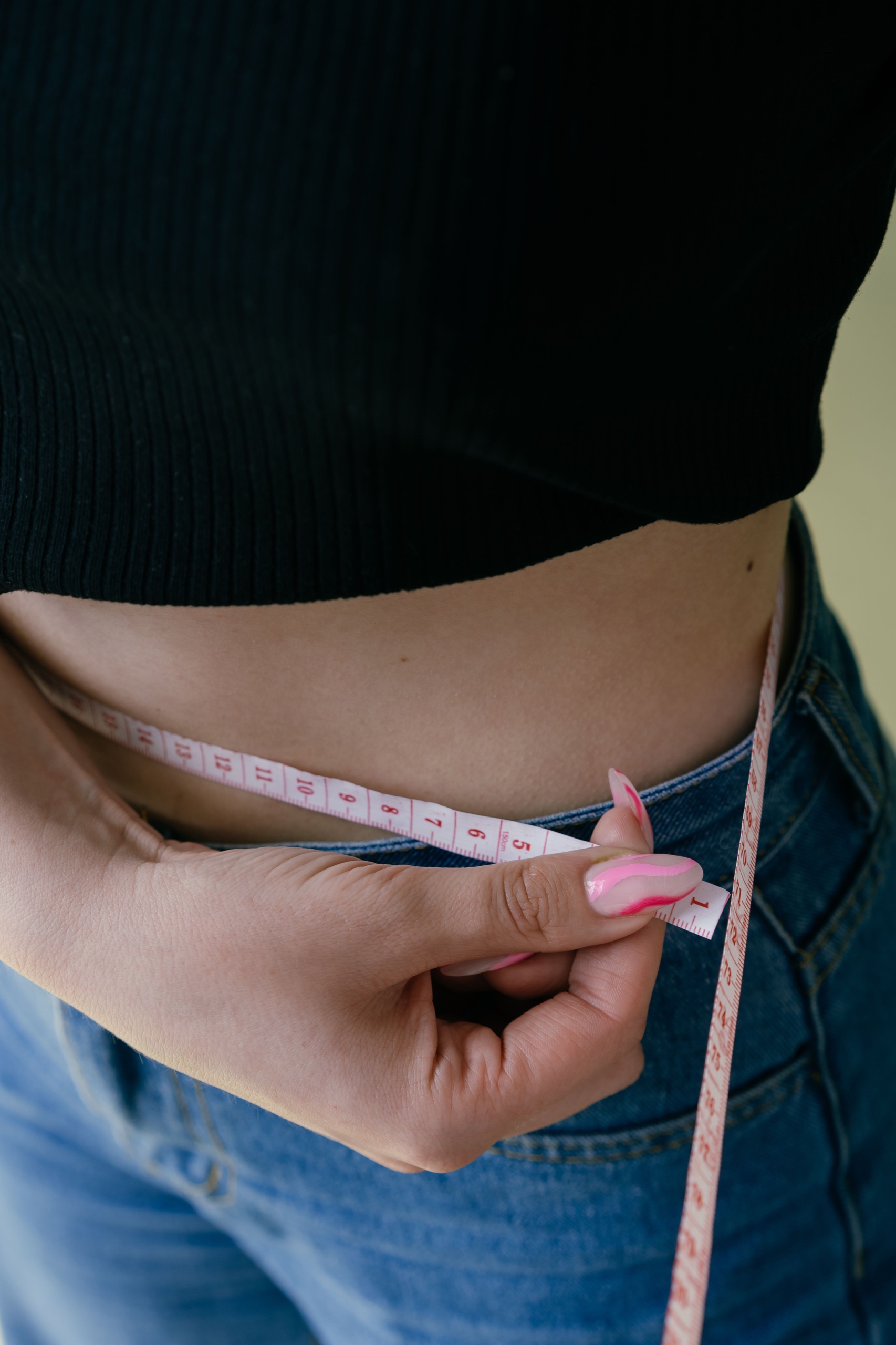
If you track waist circumference, use the same method each time. Place the tape around the middle just above the hip bones, keep it level, and measure after a normal exhale. A monthly trend is usually more informative than daily checks. The Centers for Disease Control and Prevention provides the same measurement approach and emphasizes that waist and BMI are screening tools.
Why Two People Store Fat Differently
Genes influence where fat cells accumulate and how readily they release stored energy. Sex hormones shape distribution across the abdomen, hips, and thighs. Visceral fat often rises with age, and the pattern can change during menopause. Sleep, alcohol intake, smoking, physical activity, food patterns, chronic stress, and some medicines can also contribute.
Energy balance still matters, but it operates inside that biology. This is why a rigid meal rule or a punishing workout does not produce the same body change for everyone. It is also why appearance offers an unreliable reading of blood pressure, glucose, triglycerides, liver fat, or cardiovascular fitness.
IHJ’s guide to the set point theory of body weight examines how appetite and energy expenditure adapt during weight change. The article on sleep, stress, hormones, and metabolism adds the wider context behind day-to-day food and activity choices.
Use the Measurements That Change Decisions
A useful metabolic picture may include waist trend, blood pressure, fasting glucose or A1C when appropriate, triglycerides, HDL cholesterol, family history, activity, sleep, and smoking status. Each item answers a different question. None provides a complete health grade.
Someone with a higher waist measurement and rising triglycerides has more actionable information than someone who only knows a body-fat percentage from a home scale. Consumer body-composition devices estimate tissue from electrical impedance and hydration. They do not directly measure visceral fat, even when an app displays a visceral-fat rating.
Discuss a changing waistline with a clinician when it accompanies unexpected weight change, swelling, abdominal pain, shortness of breath, new medication use, or abnormal lab results. A professional can decide whether the pattern calls for routine prevention, further testing, or evaluation of another cause.
Habits Affect More Than One Fat Depot
Regular aerobic activity and resistance training can improve insulin sensitivity, fitness, strength, and blood pressure even when the scale moves slowly. A food pattern built around vegetables, fruit, beans, whole grains, nuts, fish or other protein sources, and unsaturated fats can support cardiometabolic health without requiring a special “visceral fat” product.
Alcohol deserves attention because frequent or high intake can add energy and contribute to triglyceride and liver changes. Sleep consistency matters because short or irregular sleep can affect appetite, glucose regulation, and training recovery. Smoking raises cardiovascular risk at any waist size.
Choose a change that produces a trackable outcome:
- Add two short strength sessions to a week and record completion.
- Build one repeatable lunch around fiber-rich plants and a satisfying protein source.
- Measure the waist once a month under the same conditions.
- Pair the waist trend with blood pressure, fitness, or lab results instead of reading it alone.
These steps support health across body-fat patterns. They also keep attention on routines that can be sustained, which matters more than chasing a rapid change in one measurement.
Distribution Adds Context to Weight
Large imaging cohorts such as the UK Biobank and Framingham studies find a stronger association between visceral fat and cardiometabolic disease than between subcutaneous fat and those outcomes. Subcutaneous tissue still has biological effects, and high total adiposity can matter regardless of location. The categories describe tendencies across populations, not a verdict about an individual body.
Use waist circumference as one clue, combine it with established risk factors, and skip scans or consumer scores that will not change a decision. The practical aim is a clearer view of metabolic health and a routine sturdy enough to improve it over time.