

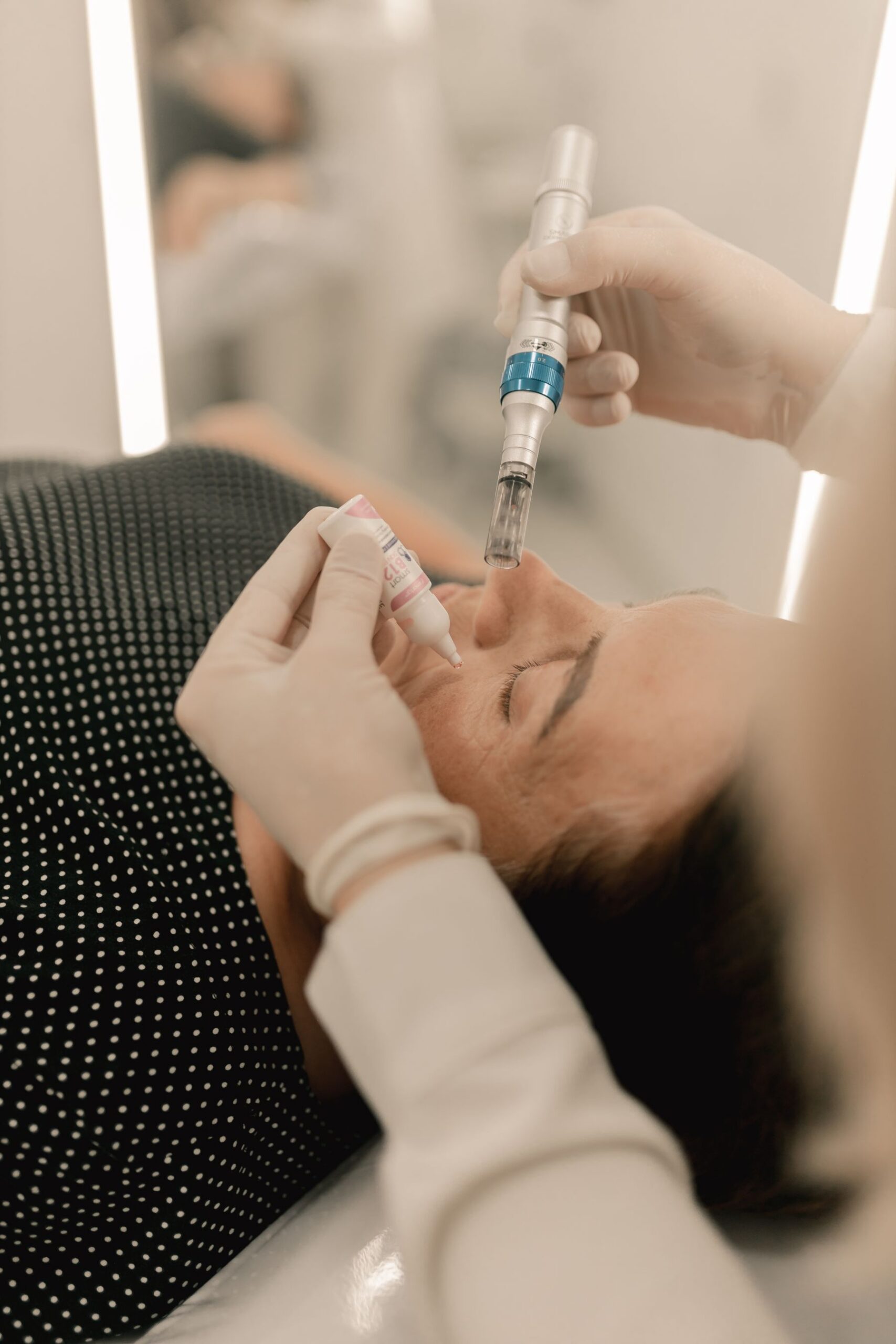
Microneedling usually feels uncomfortable rather than sharply painful when it is performed with topical numbing medicine. People often describe pressure, vibration, scratching, or a prickling sensation. The forehead, upper lip, and areas close to bone can feel more sensitive than the cheeks.
The experience changes with needle depth, device type, treatment area, numbing time, and individual sensitivity. A light cosmetic treatment is not comparable to a deeper procedure used for acne scars. Radiofrequency microneedling adds heat and has a different risk profile.
What Happens Before the Needles Touch the Skin
A medical microneedling appointment should begin with a review of the treatment goal, skin type, medications, previous scarring, active skin conditions, and tendency to develop dark marks after inflammation. The skin is cleansed, and a topical anesthetic may be applied for a set period before treatment.
Numbing cream reduces sensation but does not make the face completely numb. Removing it too early, treating a sensitive area, or using a deeper setting can make the procedure more uncomfortable.
What Microneedling Feels Like by Area
The sensation is often uneven across the face. The device may feel like a rough electric toothbrush on fleshy areas. Over the forehead or jawline, vibration can travel through the bone and sound louder to the person receiving treatment.
Cheeks
Cheeks are commonly easier to tolerate because they have more soft tissue. Deeper passes over acne scars can still produce a sharper prickling feeling and small points of bleeding.
Forehead and Temples
These areas may feel more intense because the skin lies close to bone. A provider can adjust depth and speed rather than assuming every part of the face needs the same setting.
Upper Lip and Nose
The upper lip is sensitive for many people. The nose can feel ticklish, sharp, or difficult to tolerate around the nostrils. Treatment should remain controlled; severe pain is not something a patient has to endure for the procedure to work.
Pain Does Not Measure Effectiveness
A more painful session is not automatically a better session. The appropriate depth depends on the device’s authorized use, the target condition, skin thickness, and the provider’s training.
The U.S. Food and Drug Administration explains that medical microneedling devices intentionally penetrate the skin. Expected effects can include redness, tightness, itching, peeling, bruising, and bleeding. Infection, changes in pigmentation, and reactivation of herpes cold sores are among the possible complications.
Needle depth should not be increased simply because a patient tolerates discomfort. Excessive penetration can injure underlying tissue and increase the chance of scarring or pigment changes.
How the Skin Feels Afterward
Immediately after treatment, the skin often looks red and feels warm or tight, similar to a sunburn. Mild swelling and pinpoint bleeding can occur. The sensation usually settles before the visible redness fully resolves.
During the next few days, skin may feel dry, rough, itchy, or tender. Flaking can occur as the surface recovers. Scrubbing, picking, strong acids, retinoids, and unapproved products can worsen irritation.
Aftercare instructions vary with the device and treatment depth. Follow the treating clinician’s plan for cleansing, moisturizer, sun protection, exercise, makeup, and the timing of active skin-care products. Contact the practice if pain increases rather than improves.
Standard and Radiofrequency Microneedling Are Different Procedures
Standard microneedling creates controlled mechanical channels. Radiofrequency microneedling delivers energy below the skin through needles. The heat is intended to affect deeper tissue, and the procedure may feel hotter or more intense.
In October 2025, the FDA issued a safety communication about serious complications reported with certain uses of RF microneedling. Reports included burns, scarring, fat loss, disfigurement, and nerve damage. The warning does not mean every treatment causes harm. It does mean RF microneedling should be treated as a medical procedure requiring appropriate training, device selection, and patient counseling.
Who May Need to Avoid or Postpone Treatment
The FDA notes that microneedling may be unsuitable for people with active skin infection, active acne outbreaks, certain bleeding disorders, immune suppression, uncontrolled diabetes, or a history of problematic scarring. Blood-thinning medication can increase bleeding risk. Pregnancy, recent isotretinoin use, radiation treatment, and active inflammatory skin disease require specific medical discussion.
Do not stop a prescribed medication to qualify for a cosmetic procedure. The prescriber and treating clinician should decide whether treatment can be performed safely or should wait.
Home Rollers Do Not Reproduce a Medical Treatment
At-home rollers and stamping products vary in needle length, manufacturing quality, and cleanliness. Some barely affect the surface; others can puncture skin. Reusing or inadequately cleaning a device can introduce bacteria. Applying products not intended for broken skin may cause irritation or allergy.
The FDA’s device guidance also cautions that approved microneedling devices have specific indications. Clearance for one use does not establish safety for delivering cosmetics, vitamins, platelet-rich plasma, or other substances through the channels.
Questions to Ask Before Booking
- Which device will be used, and is it standard or radiofrequency microneedling?
- Who will perform the procedure, and what training do they have?
- What depth and treatment goal are planned for my skin?
- How is the cartridge kept sterile and used only once?
- What complications are more common with my skin type and medical history?
- What pain control and aftercare are included?
- Who should I contact if pain, swelling, discoloration, or drainage worsens?
A competent provider should be willing to explain why a specific device and setting fit the treatment goal. A promise of no discomfort, no downtime, and no risk is not realistic.
When Pain Signals a Problem
Brief tenderness and a sunburn-like feeling are common. Severe pain during treatment should prompt the provider to stop and assess the skin. Afterward, rapidly increasing pain, spreading redness, pus, fever, blistering, dusky discoloration, new weakness, or numbness needs prompt medical evaluation.
Microneedling does not have to be painless to be tolerable. It also should not be an endurance test. The safest experience comes from appropriate numbing, conservative settings, a qualified provider, and clear aftercare.