

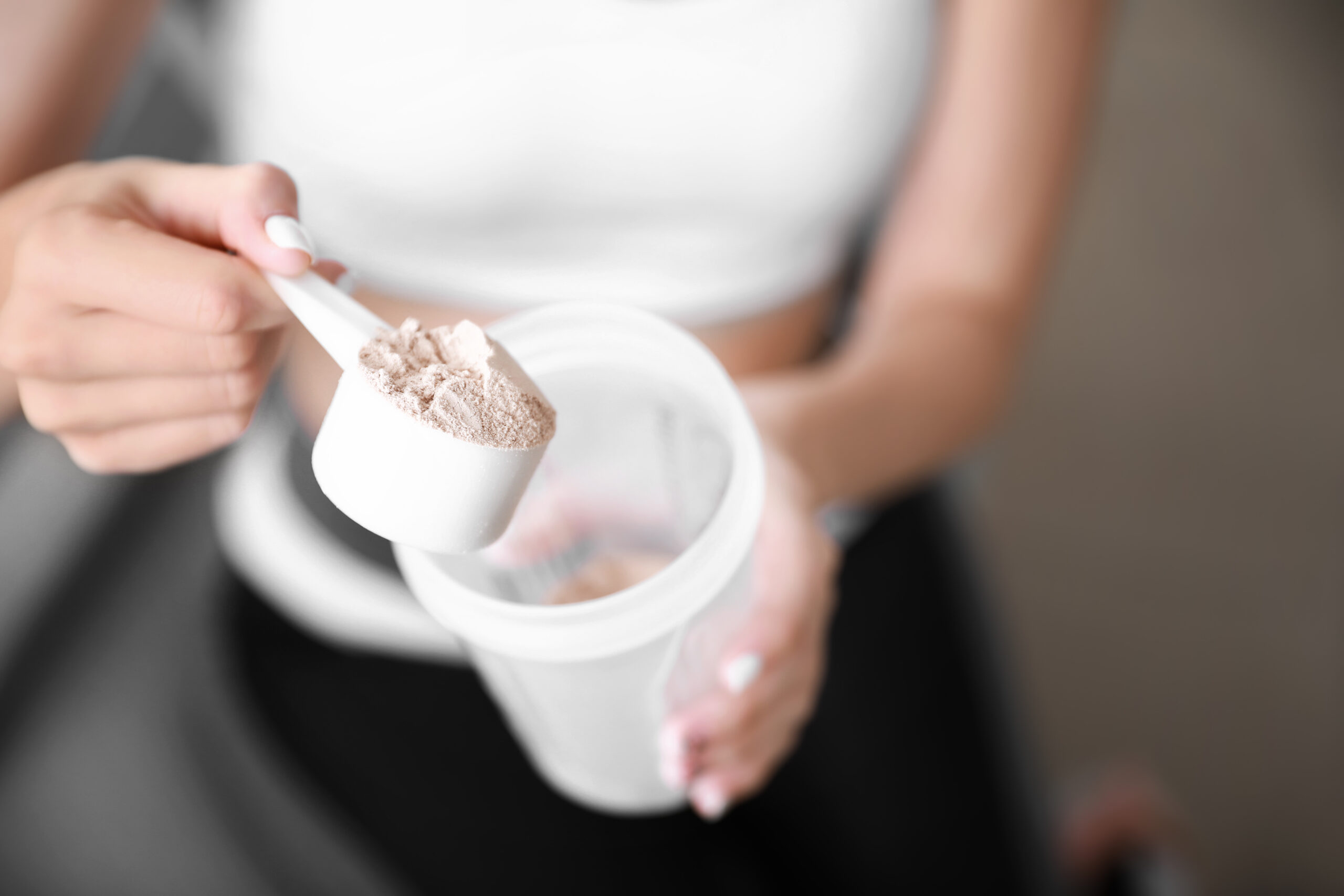
But How Much Do You Actually Need?
Walk through a grocery store today and protein is everywhere. Protein cereal. Protein coffee. Protein chips. Protein pasta. Protein bars that look like candy bars. Yogurt with the number of grams printed larger than the flavor.
The message is clear: more protein is better.
It is a compelling shift, especially after decades of diet culture that often pushed people toward low-fat, low-calorie, low-everything eating. Protein is essential. It supports muscle, bone, immune function, hormones, enzymes, wound healing, metabolism, and satiety. Many people, especially women, older adults, and those trying to build or maintain muscle, may benefit from paying more attention to it.
But the current protein conversation has also become a little too simple.
Protein matters. That does not mean every food needs to be fortified with it, every meal needs to be optimized around it, or every person needs to eat like a strength athlete.
The better question is not, “How do I get as much protein as possible?”
It is, “How much protein does this body actually need?”
Why Protein Became the Nutrient of the Moment
Protein’s rise makes sense.
Unlike many nutrition trends, this one is not built from nothing. Protein helps preserve lean mass, especially when paired with resistance training. It can make meals more satisfying. It can support blood sugar stability when it replaces a highly refined, low-protein meal. It becomes increasingly important with age, when muscle becomes harder to maintain.
There is also a cultural correction happening. Many people spent years eating breakfasts that were mostly coffee and carbohydrates, lunches that were too light, and dinners that carried nearly all the day’s protein. Others were told to simply eat less, without enough attention to maintaining strength, metabolism, or satiety.
In that context, the renewed focus on protein is useful.
The problem begins when a useful correction becomes a new obsession.
Nutrition has a habit of turning good ideas into slogans. Fat was bad, then carbs were bad, now protein is good. But the body is not interested in slogans. It is interested in patterns, adequacy, and context.
The Baseline Is Lower Than Most People Think
The recommended dietary allowance for protein for a generally healthy adult with minimal physical activity is often cited as 0.8 grams per kilogram of body weight per day. That is about 0.36 grams per pound.
But that number is widely misunderstood.
It is not necessarily the “optimal” amount for every goal. It is a baseline intended to prevent deficiency for most healthy adults. It does not automatically account for strength training, aging, illness, injury recovery, weight loss, pregnancy, breastfeeding, or efforts to preserve muscle.
This is where much of the confusion begins.
One person hears 0.8 grams per kilogram and assumes anything higher is excessive. Another hears a fitness influencer recommend one gram per pound and assumes anything lower is inadequate.
Both are oversimplifications.
Protein needs are not a single universal number. They depend on body size, age, activity level, muscle mass, health status, goals, appetite, kidney function, and total diet quality.
Who May Need More Protein
Some people do have higher protein needs.
Active adults, especially those doing resistance training, generally require more protein than sedentary adults. Research in sports nutrition commonly supports a range around 1.4 to 2.0 grams per kilogram per day for many exercising individuals, depending on training and goals.
Older adults may also benefit from more than the basic RDA. As people age, they can become less responsive to the same protein dose, a concept often called anabolic resistance. This means the body may need a stronger signal from protein and resistance training to maintain muscle. Some expert groups recommend around 1.0 to 1.2 grams per kilogram per day for healthy older adults, with higher needs in illness or injury.
People losing weight may also need more protein, because calorie restriction can increase the risk of losing lean mass along with fat. Protein can help preserve muscle, especially when combined with strength training.
This does not mean everyone needs a high-protein diet.
It means some people are under-eating protein for the body they are asking to function in.
The Real Issue Is Often Distribution
Many people do not eat too little protein across the whole day as much as they eat it unevenly.
Breakfast may be toast, cereal, coffee, or fruit. Lunch may be a salad with very little protein. Dinner may be the only meal with a meaningful serving of chicken, fish, meat, tofu, eggs, beans, or yogurt.
The result is a long stretch of the day where the body has not received much protein, followed by a large dose at night.
For muscle maintenance and satiety, distribution matters. A practical target for many adults is to include a meaningful protein source at each meal rather than trying to make dinner do all the work. For many people, that may look like roughly 25 to 35 grams per meal, though needs vary.
This is where the protein conversation becomes less dramatic and more useful.
Not “How do I hit a massive daily number?”
But “Does each meal contain enough protein to support my energy, hunger, and muscle?”
Protein Quality Matters, But Not in the Way It Is Marketed
Protein quality refers to how well a protein source provides essential amino acids, especially leucine, which plays an important role in muscle protein synthesis.
Animal proteins such as eggs, dairy, fish, poultry, and meat tend to be complete proteins, meaning they contain all essential amino acids in useful amounts. Soy is a complete plant protein as well. Other plant proteins, such as beans, lentils, nuts, seeds, and whole grains, can still contribute meaningfully, especially when eaten in variety across the day.
The wellness industry often turns this into a hierarchy.
Whey is best. Collagen is clean. Plant protein is inferior. Animal protein is superior. Or the reverse, depending on the corner of the internet.
The reality is more practical.
A person’s best protein sources are the ones that fit their health needs, digestion, preferences, budget, ethics, and overall diet. A high-protein diet built mostly on processed meats is not the same as one built from fish, yogurt, eggs, legumes, tofu, lean poultry, nuts, seeds, and minimally processed foods.
The source matters because the food around the protein matters too.
The Collagen Confusion
Collagen is one of the clearest examples of protein marketing getting ahead of nuance.
Collagen is a protein, but it is not a complete protein. It is low in certain essential amino acids and is not the best choice for stimulating muscle protein synthesis. That does not make it useless. It may have a role in supporting skin, joints, tendons, or connective tissue in some contexts, though the evidence varies by use.
The problem is when collagen is counted as if it were the same as eggs, Greek yogurt, fish, chicken, tofu, or whey.
A coffee with collagen may add protein grams to the label, but it may not provide the same muscle-supporting signal as a complete, leucine-rich protein source.
This is not a reason to avoid collagen.
It is a reason to understand what kind of protein it is.
More Is Not Always Better
Protein is essential, but there is a point where more may stop adding much benefit.
For many healthy, active people, a higher-protein diet can be safe and useful. But extremely high intakes are not automatically better. They may crowd out fiber-rich carbohydrates, healthy fats, fruits, vegetables, and other nutrients. They may also be inappropriate for people with kidney disease or certain medical conditions.
There is also a psychological cost when food becomes another optimization project.
If every meal is judged only by its protein count, something has been lost. Nutrition is not only grams. It is meal quality, culture, enjoyment, digestion, metabolic health, training demands, and long-term sustainability.
A protein bar can be useful. It is not automatically a better choice than a balanced meal.
A food with protein added is not automatically healthier than the original food.
The number on the front of the package is not the whole story.
Protein Without Strength Training Has Limits
Protein can support muscle, but it does not build or preserve muscle very well on its own.
Muscle needs a reason to stay.
That reason is mechanical load: lifting, carrying, pushing, pulling, climbing, squatting, walking uphill, using resistance bands, or doing structured strength training.
This is especially important with age. A person can eat more protein and still lose strength if they are not using their muscles. Likewise, someone can train hard but under-eat protein and limit their recovery.
The combination matters more than either piece alone.
Protein provides the building blocks. Resistance training provides the signal.
The More Useful Question
Perhaps the better question is not whether protein is good. It is. The better question is whether your protein intake matches your life.
Are you active? Are you trying to build or maintain muscle? Are you in midlife or older? Are you recovering from injury or illness? Are you losing weight? Are you hungry soon after meals? Are you eating most of your protein at dinner? Are you relying on protein-labeled snacks instead of real meals?
For many people, the answer is not a dramatic diet overhaul. It is a protein source at breakfast. A more substantial lunch. A plan for strength training. More attention to aging muscle. Less reliance on ultra-processed “protein” products that are still mostly snack foods.
Protein is not a miracle nutrient. It is a necessary one. And like most things in health, it works best when it is used in context.
Ready to Think About Protein More Clearly?
Protein can play an important role in energy, satiety, muscle, metabolism, and healthy aging, but more is not always the same as better. The right amount depends on the person, the goal, and the overall pattern of the diet.
At The Integrated Health Journal, we help readers look past nutrition trends and understand what the evidence actually means in daily life. Protein matters, but it does not need to become another source of confusion. It needs to become part of a smarter, more sustainable health conversation.