

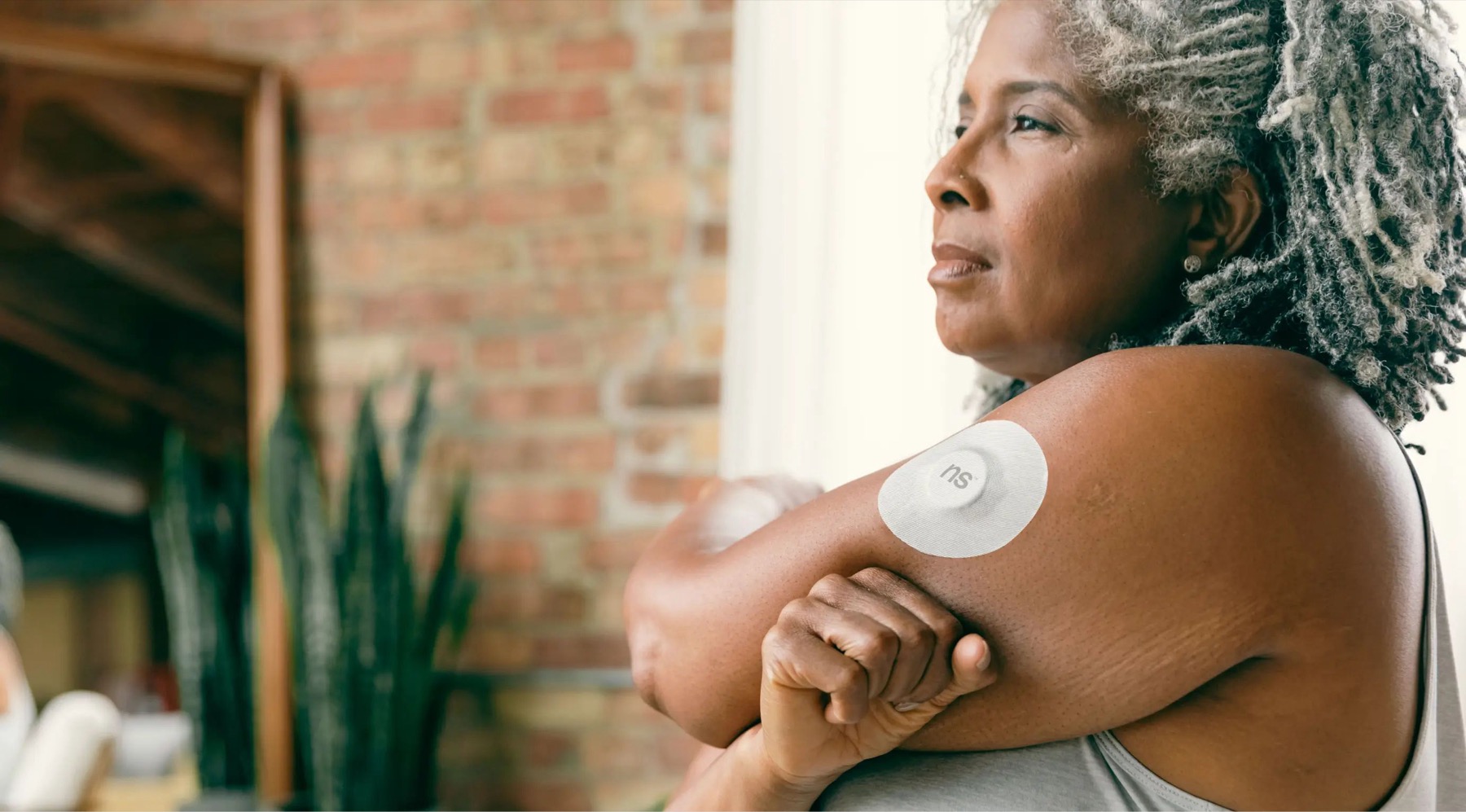
A continuous glucose monitor can turn an invisible process into a bright line on a phone. Eat breakfast and the line rises. Take a walk and it may fall. Sleep badly and the next day looks different. For someone who has never measured glucose outside a yearly blood test, the stream of data can feel like a private window into metabolism.
The device is valuable for people with diabetes. Its value for a healthy person is less settled. A short experiment may reveal useful patterns, particularly for someone with prediabetes or a specific clinical question. It can also create worry over normal fluctuations and encourage food rules that the evidence does not support.
What a CGM Measures
A small sensor sits under the skin, usually on the upper arm or abdomen. It measures glucose in interstitial fluid rather than directly in blood. Readings update every few minutes and lag behind blood glucose, especially when levels change quickly.
That distinction matters. Sensor pressure during sleep, hydration, temperature, medication interference, placement, and the first day of wear can affect readings. A single surprising number is not a diagnosis.
The U.S. Food and Drug Administration has cleared over-the-counter systems for adults who do not use insulin, including people without diabetes who want to observe the effects of food and activity. The FDA’s clearance notice also explains that these products are not intended for people with problematic low blood sugar because some do not provide the alerts needed for that risk.
What the Data Can Show
A CGM is good at displaying trends. It can show how glucose responds to a large carbohydrate meal, exercise, alcohol, a late dinner, or an overnight fast. Someone with prediabetes may use those patterns to connect a clinician’s advice with daily choices.
The feedback can be motivating. A ten-minute walk after dinner produces a visible result. Adding protein and fiber changes the shape of a meal response. The device can make an abstract recommendation concrete.
CGM may also capture patterns missed by a fasting blood test. That does not make it a replacement for established screening. A1C, fasting glucose, and an oral glucose tolerance test have diagnostic thresholds and clinical context. Consumer dashboards often apply proprietary scores with less established meaning.
Healthy Glucose Is Supposed to Move
Glucose rises after eating because carbohydrate is digested and absorbed. Insulin helps move that glucose into cells. A temporary increase is part of normal physiology.
In a study of healthy children and adults using blinded monitors, glucose readings stayed between 71 and 120 mg/dL for most of the day, while excursions outside that range still occurred. Another study comparing CGM with venous blood in healthy older adults found meaningful measurement error. These results are reminders that a healthy trace is not perfectly flat.
Online comparisons can distort interpretation. Two people may eat the same food and show different curves because of sleep, recent exercise, meal composition, time of day, stress, menstrual phase, sensor variation, or ordinary biology. The smaller rise is not automatically the healthier person.
Evidence for Better Outcomes Is Still Limited
Research on CGM in people without diabetes is growing, but much of it focuses on feasibility, short-term behavior, or glucose patterns rather than long-term disease prevention. A 2026 systematic review reported benefit for glycemic control in people with prediabetes and no appreciable glycemic benefit in healthy participants with normal glucose regulation.
That does not make the device useless. It limits the claims that can responsibly be made. There is not yet strong evidence that a few weeks of consumer CGM use in a healthy person prevents diabetes, extends life, or identifies a personalized ideal diet.
Prediabetes Is a Different Use Case
A person with an elevated A1C, a history of gestational diabetes, or other metabolic risk has a clinical reason to focus on glucose. CGM feedback may support changes already grounded in evidence: regular activity, adequate sleep, weight management when appropriate, and a fiber-rich eating pattern.
The device works best when someone knows which question they are asking and how the answer will change care.
Athletic Use Is Still Context Dependent
Endurance athletes sometimes use CGM to study fueling and recovery. Glucose is one signal among many. Performance, hydration, gastrointestinal comfort, training load, and total energy intake still matter. Chasing a perfectly stable line can lead an athlete to under-fuel demanding sessions.
Common Ways the Data Goes Wrong
- Treating every rise as damage: Normal meals cause glucose to rise.
- Changing food based on one exposure: The same meal can produce a different response on another day.
- Ignoring the complete meal: A low glucose curve does not tell you whether a meal supplied enough protein, fiber, vitamins, or energy.
- Reacting to a sensor artifact: Pressure on the sensor can create an apparent overnight low.
- Using a consumer score as a diagnosis: Proprietary app metrics are not interchangeable with clinical tests.
- Becoming afraid of carbohydrate: Fruit, beans, whole grains, and dairy can raise glucose while contributing valuable nutrition.
Who Should Pause Before Using One
CGM may be a poor fit for someone with an eating disorder, severe food anxiety, obsessive health tracking, or a tendency to make restrictive rules from small changes. More data can amplify the problem.
Skin reactions to adhesive are possible. The sensor can loosen, bleed slightly at insertion, or produce unreliable readings. A person who has symptoms of dangerously high or low glucose should seek medical advice rather than rely on a wellness app.
How to Run a More Useful Experiment
Begin with a defined question. Does a walk after dinner alter the curve? Is a certain breakfast followed by hunger or fatigue? How do sleep and meal timing relate to the next morning?
Repeat the comparison on more than one day. Keep the rest of the meal similar. Record sleep, activity, and symptoms. Look for patterns rather than individual peaks. Discuss persistent abnormal readings with a clinician and confirm concerns using appropriate blood tests.
A CGM is a measurement tool, not a grade on how well someone ate. For a person with prediabetes or a focused question, it may turn advice into action. For a healthy person seeking certainty from every meal, it may produce far more interpretation than useful information.